
Most sales teams don’t have a closing problem. They have a pipeline problem: reps spending half their week chasing people who were never going to buy. A lead generation call center exists to fix that. It finds prospects, qualifies them, and hands your sales team conversations that are ready to happen.
This post covers what these call centers do, how inbound and outbound work differ, which numbers tell you whether the program is working, and what to ask before you sign with one. If you’ve already decided to outsource and want to know how an engagement is structured and priced, our lead generation outsourcing page covers that side.
What a lead generation call center does
A lead generation call center is a team of trained agents whose only job is the top of your funnel. They identify potential customers, start the conversation, gather what your sales team needs to know, and set the appointment. Your reps pick up from there.
Most providers offer three core services:
- Prospecting. Building and working a targeted contact list, by phone first and often with email and LinkedIn follow-up.
- Lead qualification. A structured conversation that confirms budget, authority, need and timing before anyone from sales gets involved.
- Appointment setting. Booking the qualified prospect directly onto a rep’s calendar, with notes from the call.
Inbound vs. outbound
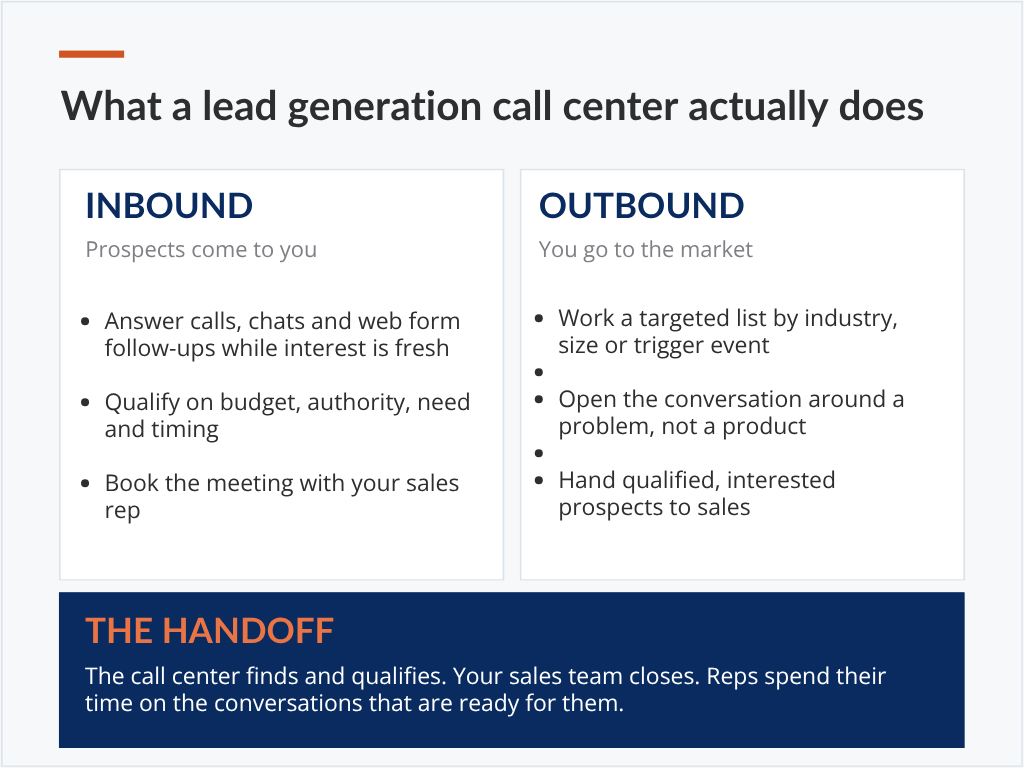
Inbound lead generation handles the people who come to you: calls, chats and web form submissions. These leads convert at higher rates because the interest already exists, so the job is speed and qualification. Outbound lead generation goes to the market: agents work a list, open conversations around a problem the prospect probably has, and pass along the ones who want to keep talking. Outbound costs more per lead but it’s how you reach accounts that would never have found you.
Most programs run both. Inbound keeps the sales team fed from existing demand, outbound builds pipeline in the segments you want to grow.
“As AI solutions become more prevalent across lead gen, there’s a huge opportunity for thoughtful brands to invest in specialized agents that can deploy AI efficiencies without losing the tailored, human touch that motivates consumer decisions.” Corey Kotlarz, President, Outsource Consultants
How lead generation call centers drive sales growth
The growth doesn’t come from more dials. It comes from three things a dedicated team does better than a sales rep squeezing prospecting in between demos.
Better targeting
A refined call list is where most of the result is decided. Good providers segment prospects by industry, company size, tech stack or trigger events such as a funding round, a new executive hire or an office opening, and they refresh the data instead of working a list until it’s dead. A B2B software company, for example, might target only companies that raised a round in the last 90 days.
Conversations built around problems
Effective scripts don’t pitch. They open with a problem the prospect is likely to recognize and ask whether it applies. “A lot of teams in your space are losing deals to slow follow-up. Is that something you’re seeing?” gets a real answer. “I’d love to tell you about our platform” gets a hang-up.
Agents who are trained for this and nothing else
Lead generation is a skill, and the providers that do it well treat it that way: product knowledge, objection handling, and regular role-play against the objections your market actually raises. An agent who makes 80 qualification calls a day gets better at them faster than a rep who makes eight.
Measuring what matters
Call volume and talk time are activity, not results. The numbers worth tracking are the ones that connect the call center’s work to revenue:
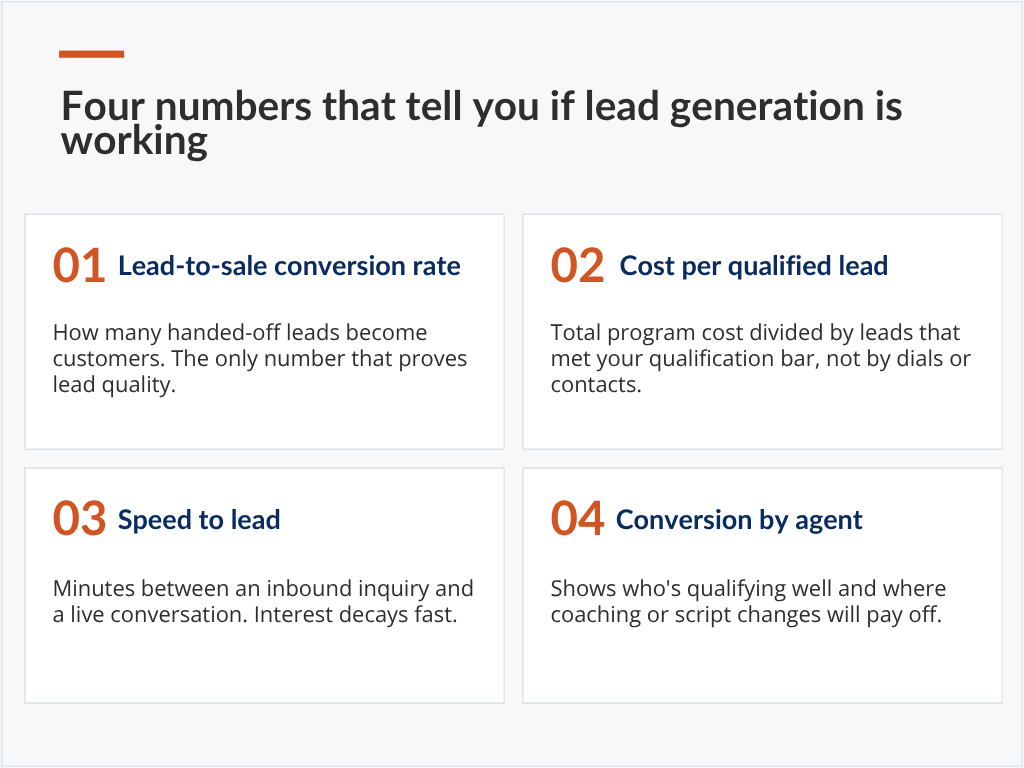
- Lead-to-sale conversion rate. How many handed-off leads become customers. This is the only number that proves lead quality.
- Cost per qualified lead. Total program cost divided by leads that met the qualification bar you agreed on, not by contacts or dials.
- Speed to lead. For inbound, the minutes between an inquiry and a live conversation. Interest decays fast.
- Conversion rate by agent. Shows who’s qualifying well and where coaching or a script change will pay off.
If a provider reports dials and contacts but can’t show you conversion by lead, that’s the conversation to have before you renew.
The technology behind a modern lead generation call center
Three pieces of technology separate a strong provider from a room full of phones.
CRM integration. Every interaction should land in your CRM, not a spreadsheet the provider emails on Fridays. Real-time updates mean your reps see the qualification notes before the meeting, and marketing sees which segments are converting.
AI and automation. AI handles the routine work around the call: enriching lists, scoring leads so agents call the likeliest prospects first, transcribing and analyzing calls to show which openings and objection responses are working. Some providers also use AI voice agents for first-touch qualification on inbound. Where that fits depends on your market; a buyer researching a six-figure contract usually expects a person. Our CX strategy team helps clients decide where automation belongs in the funnel and where it costs you deals.
Analytics. Good providers use their own call data to refine timing, list segments and scripts, and they show you the analysis rather than just the outcome.
Choosing a lead generation call center
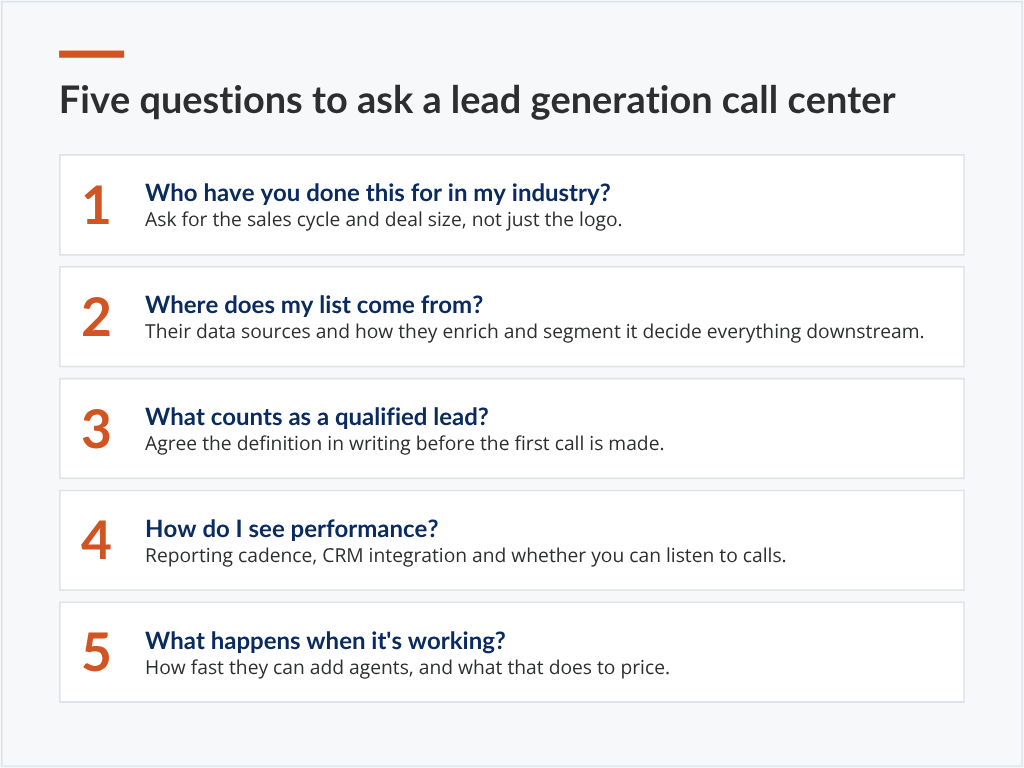
Industry experience, data quality, a written definition of a qualified lead, transparent reporting and the ability to scale are the five things that decide whether a program works. Ask about each one before you sign.
Outsource Consultants has vetted hundreds of call center partners, including lead generation specialists across onshore, nearshore and offshore markets. We match you with the two or three that fit your industry, sales cycle and budget, at no cost to you. See how lead generation outsourcing works with OC, or talk to us about your pipeline.
FAQs about lead generation call centers
How is a lead generation call center different from a sales team?
The call center finds and qualifies potential customers. The sales team closes them. Most companies that use a lead generation call center do so to filter out low-fit leads so reps spend their time on the best opportunities.
Is cold calling still effective?
Yes, when it’s targeted. Cold calling works when the list is tight, the message addresses a specific problem, and the call is followed by email or LinkedIn. It fails when it’s random dials and a product pitch.
Which industries use lead generation call centers?
Any business that needs a steady flow of new customers. The most common are technology and software, financial services, healthcare, insurance, telecom, and retail and e-commerce.
How much does a lead generation call center cost?
It depends on call volume and complexity, where the agents are located, and the pricing model. Providers charge per hour, per qualified lead or per appointment, and nearshore and offshore teams typically cost 30–50% less than domestic ones for comparable work. Our lead generation outsourcing page goes into pricing models.
How long until I see results?
Qualified leads usually start arriving within the first few weeks. Conversion rates improve over the first few months as the provider refines the list and the script against real responses. A clear onboarding, with your qualification criteria and target accounts defined up front, is what speeds that up.